
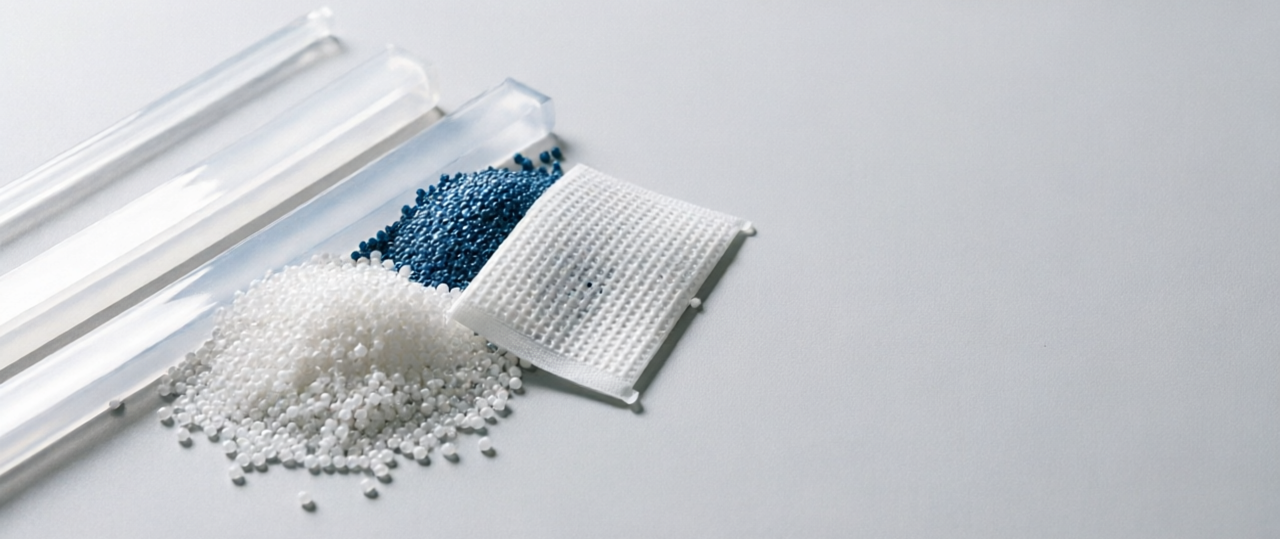
Basic Knowledge of Silica Gel: Differences and Applications of Inorganic Silica Gel and Organic Silicone
What is Silica Gel / Silicone?
Silica Gel / Silicone is a polymer material based on siloxane. According to its chemical structure, it can be divided into two major categories: inorganic silica gel and organic silicone. Inorganic silica gel is primarily composed of silicon dioxide (SiO₂), a porous material with high adsorption capacity used as a desiccant; organic silicone (i.e., silicone rubber or silicone resin) is composed of siloxane bonds (Si-O-Si), combining the stability of inorganic materials with the flexibility of organic materials. Both are widely used in industries such as global manufacturing, food, medical, and electronics.
Inorganic Silica Gel: Properties and Global Applications
Chemical Structure and Adsorption Principle
Inorganic silica gel is produced by reacting sodium silicate with acid, followed by aging, acid soaking, washing, and drying. It contains a large number of nanoscale pores, with a specific surface area reaching 300–800 m²/g. Its moisture adsorption relies primarily on physical adsorption (van der Waals forces) and capillary condensation, effectively absorbing moisture in environments with relative humidity ranging from 20% to 90%, and it is可再生 (regenerable) by heating to 120–180°C.
Key Application Scenarios
- Moisture Protection for Electronics and Precision Instruments: In humid regions such as Southeast Asia, Japan, and South Korea, inorganic silica gel is widely used as a desiccant in chip packaging, optical lenses, and medical device transportation to prevent metal oxidation and mold growth.
- Preservation of Food and Pharmaceuticals: In the U.S. and European markets, food-grade inorganic silica gel (compliant with FDA and EU standards) is commonly used inside packaging for seaweed, nuts, health supplements, and medicine bottles. Color-changing indicators (e.g., blue to pink) allow users to easily assess moisture levels.
- Industrial Adsorption and Catalyst Support: In the petrochemical industry in Russia and Europe, modified silica gel is used to adsorb harmful gases (e.g., sulfides) or serve as a catalyst support.
Organic Silicone: Elasticity, Weather Resistance, and Biocompatibility
Classification and Performance Advantages
Organic silicone typically refers to polysiloxane (PDMS) and its vulcanized products. Based on form, it can be categorized into: High-Temperature Vulcanizing (HTV) Silicone Rubber, Room-Temperature Vulcanizing (RTV) Silicone Rubber, and Liquid Silicone Rubber (LSR). Its outstanding properties include:
✔ Wide temperature range: -60°C to +250°C (special formulations can reach +300°C)
✔ Excellent weather resistance: Resistant to UV, ozone, and radiation, with minimal aging
✔ Biocompatibility: Certified under ISO 10993, suitable for medical implants
✔ Hydrophobicity and electrical insulation: Low surface energy, waterproof and anti-fouling, high dielectric strength
Global Market Application Examples
- United States and Europe: Medical and Baby Products — Organic silicone is used in baby bottle nipples, catheters, and insulation layers for pacemakers due to its non-toxic, BPA-free nature and resistance to high-temperature sterilization.
- Japan and South Korea: Consumer Electronics and Automotive — Used for waterproof seals in smartphones, elastic keypads, and sealing gaskets for electric vehicle battery packs, leveraging its aging resistance and cushioning properties.
- Southeast Asia and Russia: Construction and Industry — Applied in curtain wall sealants, electronic potting compounds, and coatings for power insulators, adapting to extreme temperature variations and high humidity.
Inorganic Silica Gel vs. Organic Silicone: How to Choose?
For different regions and applications, users should consider the following distinctions:
| Comparison Dimension | Inorganic Silica Gel | Organic Silicone |
|---|---|---|
| Main Composition | SiO₂ (Silicon Dioxide) | Polysiloxane (PDMS, etc.) |
| Form | Granules, Powder | Elastomers, Liquids, Sealants |
| Core Function | Moisture adsorption, drying | Sealing, insulation, cushioning, coating |
| Temperature Range | Ambient (regenerable) | -60°C ~ +250°C |
| Food Contact Compliance | FDA 21 CFR 176.170 | FDA 21 CFR 177.2600 |
| Primary Markets | Southeast Asia, Japan (high-humidity protection) | Europe, Americas, Japan, South Korea (medical/electronics) |
Localized Procurement and Compliance Tips
United States and Europe
Food-grade inorganic silica gel must meet FDA 21 CFR or EU 10/2011 requirements; organic silicone for medical use requires ISO 10993 and CE marking. It is recommended to select suppliers with NSF or UL certification.
Japan and South Korea
The electronics industry prefers high-purity inorganic silica gel with low ionic residue (<10 ppm); automotive-grade organic silicone must comply with JIS K 6249 or KS M 6518 standards.
Southeast Asia and Russia
Heat- and humidity-resistant inorganic silica gel (pore size 8–10 nm) is more popular; construction-grade organic silicone sealants must meet GOST 25621 or ASTM C920.
Conclusion
Whether it is the moisture-absorbing protection of inorganic silica gel or the elastic sealing of organic silicone, silicone materials play an irreplaceable role in the global supply chain. Properly understanding the physicochemical properties, application scenarios, and regional compliance requirements of both types helps enterprises reduce procurement risks and enhance product reliability. For further information on technical parameters or sample testing, please contact a professional supplier for customized solutions.